
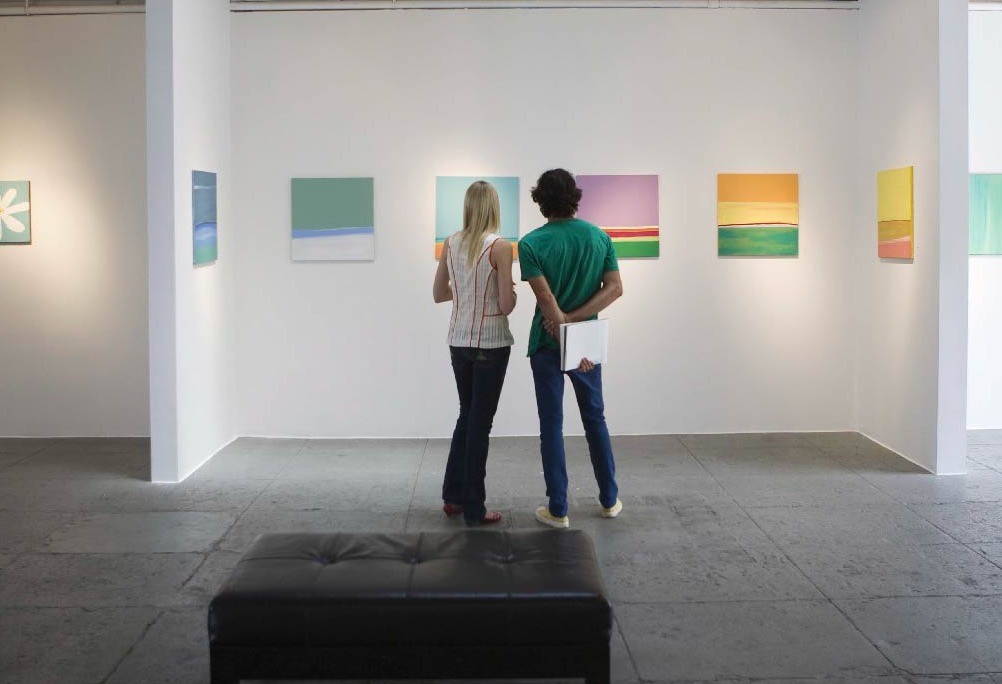
We’ve previously talked about the importance of creating the right ambience through heating, ventilation and air conditioning (HVAC) in commercial spaces such as shops, restaurants and hotels, this time we’ll look at the ambience needs of museums and art galleries.
Museum visitors spend, on average, more than two hours exploring and admiring the collections, according to a survey by the National Endowment for the Arts. Not surprisingly, atmosphere plays an important role in ensuring a comfortable experience for visitors. In general, the atmosphere of a museum or art gallery should enhance the beauty of the collections to enhance the viewing experience. But more importantly, HVAC plays an even bigger role in this type of building, as the artwork and artifacts on display need to be “cozy” as well. That is, they need to be protected and maintained in an optimal environment for their preservation during display over the years.
Agents of deterioration
Preventive conservation is the process of maintaining and caring for objects of cultural and historical value; common factors that can damage them have been established and, according to the Canadian Conservation Institute (CCI), there are specifically ten factors to watch out for, which they have called the ‘ten agents of deterioration’. These agents are: physical forces, theft and vandalism, fire, water, pests, light, dissociation, pollutants, incorrect relative humidity and temperature.
Some of these can be prevented by physically protecting the museum objects, such as by protective barriers separating them from visitors or special shock-resistant glass enclosures. But other agents need to be kept under control at all times by other means, including the HVAC system; let’s take a further look at how these agents affect artworks and cultural objects and how damage or deterioration can be prevented.
The impact of heat on works of art
High temperatures, whether resulting from incorrect temperature regulation or proximity to mechanical devices that emit heat, pose serious risks of damage to cultural heritage objects. Heat removes moisture from objects, making them more flammable, this is the main focal point for works of art on paper, canvas or wood. Heat can also warp different materials, damaging plastics, photographs and paintings and sculptures. High temperatures are also damaging to the protective enclosures in which some objects are placed; plastic and acrylic enclosures can warp when exposed to heat, and glass enclosures that can withstand higher temperatures do not provide thermal insulation, allowing heat to transfer to the artwork.
Depending on their sensitivity to heat, substances that have a very high sensitivity are called “unstable materials”. Some examples are video cassettes, cellulose and floppy disks that become unusable, rubber and foams that melt, and some acrylic paints that turn yellow in the presence of heat.
The temperature in museums and art galleries should be stable, as temperature fluctuations also present different problems. When there’s a dramatic drop from high to low temperature, moisture in the air condenses on surfaces, giving way to the next agent of deterioration: humidity.
Changes in humidity and high humidity
When talking about incorrect relative humidity, the CCI distinguishes between four categories, depending on the relative humidity (RH): above 75% RH is considered humid.
Moisture is one of the great enemies of art and historical objects, as it allows mold to grow and causes rust and corrosion on metal. The effect of mould is more profound on objects made of organic materials such as cotton, leather and paper; this does not mean that mould has no effect on inorganic materials such as ceramics, metal or stone, it just means that more superficial damage occurs which can be reversed. However, metalwork is also susceptible to damp through corrosion , a chemical deterioration particularly present on mixed metal artifacts, and iron objects may show corrosion in the form of rust.
The critical RH of an object is the value above or below normal where deterioration can begin to occur. For example, minerals go through a process called deliquescence, where they become liquid when they are above a certain RH value; this is the case with salt, which deliquesces at over 75% RH. But different materials have different critical RH values, so it is important to understand the composition of individual objects in a collection.
In some cases, anything above 0% RH is inadequate; an example of this is archives, where paper objects, film and tape must be kept at 0% RH, as any presence of humidity activates the chemical reaction that causes degradation of those materials. Archive areas are usually separate from the exhibits and are only accessible to a few specialists and use a combination of dehumidification and HVAC systems to maintain the correct environment.
Ventilation to reduce pollutants
- Just as air pollutants affect health and indoor air quality (IAQ), some specific pollutants are potentially harmful to works of art and cultural artifacts. Some of the most critical pollutants in museums and art galleries are acetic acid, hydrogen sulfide, nitrogen dioxide, and fine particulate matter.
- Acetic acid is present due to the construction of unsuitable paints and wood, they can be part of building materials, and when present in an unventilated area, can cause irreparable damage, especially to lead-based objects, which corrode.
- Hydrogen sulphide is a gaseous compound that can occur naturally in sewers, wells, mines and other underground enclosures. One of the major ways hydrogen sulfide can enter a museum or art gallery is through its own staff and visitors. Its effect can mainly be seen on silver and copper, which darken, and on some pigments used on artwork, which darken.
- Nitrogen dioxide is easily found in cities with high pollution, it is the component that gives the brownish color to smog. Unfortunately, this common pollutant can fade color pigments and degrade paper.
- The fine particles present in dust require particular attention, especially particles of small diameter, of the type described as PM2.5, which due to its small size is one of the most difficult to control. Fine particles can damage porous materials on which they settle, causing visible discoloration. Cleaning fine particles from non-porous materials does not present a particular difficulty, but in the case of porous surfaces, it can be time-consuming and challenging, and usually requires expertise to do so without causing further damage to the artwork or artifact. .
Air pollutants can be reduced by using ventilation and air filters. Ventilation and air renewal technology effectively reduces the concentration of pollutants to safe levels by bringing fresh air indoors and taking used air outdoors. Ideally, the outdoor air is pre-treated before entering the building to prevent other pollutants from entering.
Air filtration and purification have a particular role to play in museums with a restoration area. The process of restoring works of art and cultural heritage objects can release chemicals which, if not effectively reduced from the air, can become a health risk and damage other materials. This is why a restoration area should have an advanced ventilation and filtration system.
Ambience for your comfort
As museums and galleries are an important part of a country’s heritage, their contribution to tourism and culture is undeniable. This is why HVAC system design should not only take into account the preservation of works of art and cultural objects, but also, as mentioned above, the comfort and experience of visitors.
Knowing factors such as the ideal temperature and relative humidity for comfort and maintaining indoor air quality will help ensure a satisfactory visit.
Design and aesthetics
Another factor to consider when designing the HVAC system in a museum or art gallery is that many of these are typically housed in historic buildings , which have their own characteristics and challenges. The mechanical engineering components need to be installed in a way that doesn’t severely detract from the aesthetics (or the site structure) and doesn’t remove large sections of the room for them. It is common to see lowered ceilings used to conceal them , including for HVAC systems, especially when ducted systems are not an option and other systems such as VRF or Packaged are utilized. In some galleries, vents are located throughout the floor to avoid disturbing exposures.
For VRF installations, for example, Oneconcept’s award-winning Silent-Iconic Cassette Design Panel from Oneconcept is an ideal solution that further reduces the visual impact in all types of buildings. This option integrates a cutting-edge design that is perfect for historic and modern spaces, becoming another aesthetic element to add beauty to the interior. This elegant solution has the appeal of being ‘visually silent’ and does not detract from the beauty of an artistic space.

